Category Archives: Testimony of the Saints

The Anunnaki, Igigi & Fallen Angels: The Sons of God, Heavenly Chariots, Divine Missions & Spiritual Awakening

Shalom Brothers and Sisters of Light. I wanted to share a short post. The fallen angels, an extraterrestrial group known as the Igigi, were associated with celestial operations and an interplanetary transit hub on Mars. According to ancient accounts, the Igigi rebelled against the authority of the Anunnaki. I do not believe that the Igigi were apart of King Anu’s bloodline. This may be causing confusion, as everyone is grouping them together.

It’s my hope that people understand that the Anunnaki held higher authority over this group during the space mission. So many things got out of control as time progressed and there were many complaints due to their hard labor. But anyways, the Igigi descended to Earth and took human women as wives. There is reference to the Igigi, the fallen angels, in the bible although many people don’t want to connect the dots.

Genesis 6:1–2 (KJV)

“And it came to pass, when men began to multiply on the face of the earth, and daughters were born unto them, That the sons of God saw the daughters of men that they were fair; and they took them wives of all which they chose.”

The Book of Enoch also contains accounts of the Watchers, heavenly beings who descended to Earth, took human women as wives, and contributed to the corruption and wickedness that spread throughout humanity before the Great Flood. I hope humanity realizes that the fallen angels have descendants on Earth, just as the Anunnaki do.

The Benevolent & Wise Anunnaki (Sons of God) have already reached out to their chosen ones on Earth, assigning them specific tasks and divine missions, just as they did in ancient times. These individuals know who they are and understand the responsibilities entrusted to them. They have been given the words to speak when prophesying future events and delivering messages of spiritual significance. Over time, they had been learning and preparing themselves while simultaneously facing trials, tribulations, and ultimately purification. They’ve turned their lives around, kept their robes clean, and now live in righteousness, love, and truth. The Creator has completely refined and transformed them.

Many sons and daughters of the Most High have received dreams, visions, and spiritual revelations. Within these experiences, one may encounter what is understood to be the celestial chariots of the Most High. These heavenly chariots are believed to carry advanced beings who operate under the direction and authority of a higher divine power. They do not act independently but carry out the commands entrusted to them by a higher authority. During such dreams and visions, individuals may receive messages, guidance, or specific instructions concerning the tasks they are called to fulfill. The chariots may reveal themselves to you and they may follow you everywhere you go. I believe this means that you have divine protection from above if the chariots encamp around you. This was revealed to me in a dream. So, if you are seeing them in the skies, it’s for a reason. Be aware that they’ve been keeping an eye on everything you’ve been doing. They can view the content you share on social media and are aware of your thoughts, words, and actions.

Many among the descendants of the Anunnaki have heard the call and returned to the Most High. Likewise, many among the children of Israel are turning back to the commandments and remaining faithful to the One Creator. It is my hope that humanity know that the Anunnaki are members of a heavenly family, and they are our star brothers and sisters from an advanced civilization and a higher world whose history is interwoven with that of humanity. They believe in the One Infinite Creator, serving the Creator and they are often recognized as emissaries. Throughout ancient history many perceive them as the gods or simply angels in heaven. As always, if you have any heavenly encounter with any being, use discernment and test every spirit, as many have already been deceived in the UFO community. Many of them have been communicating with fallen angels which can consist of different extraterrestrial groups. Many ET groups have different agendas and it’s a lot that is going on behind the scenes. – Seraphim Sophia

Decoding the Mysteries of My March 21, 2018 Vision: “This Day Came Ye Out” — Coming Out of the Cave

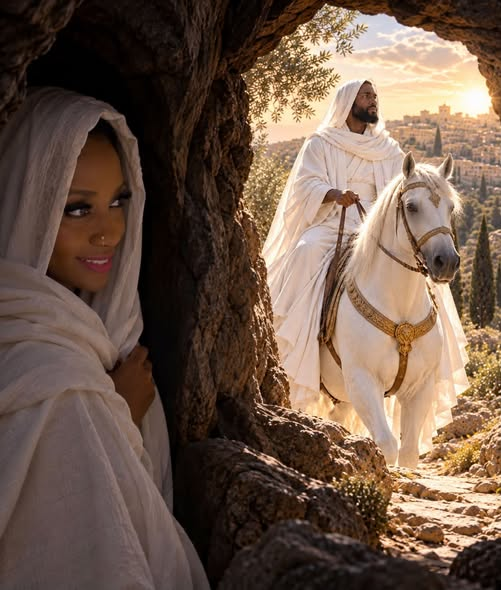
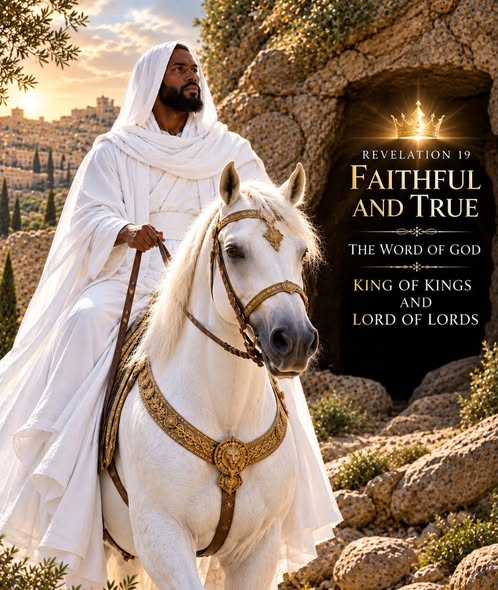
Shalom, brothers and sisters of the Light. I am now reflecting more on my dream, but even more on everything the Creator has given me over time. My dreams and visions hold great meaning for me, and emerging from the cave to be led into what I later believed represented the wedding feast with Christ was truly amazing. Yahshua called me in the vision on the day after the spring equinox, which was March 21, 2018, and I waited for him at the entrance of the cave. I stepped out of the cave and saw Yahshua sitting on a white horse, dressed in a pure white linen robe. It was one of the best dreams ever and I hold on to it. So, let’s move forward, early in my spiritual journey, I was drawn to the book of Exodus.

On July 27, 2013, after drifting back to sleep in the early morning hours of the Sabbath day, I heard a man’s voice say, “I am the God of Abraham, Isaac, and Jacob.” After the experience I instantly thought of Moses and his experiences. I was also thinking I’m no Moses lol! Why did the God of my ancestors come to me? Surely, he had been watching me. I felt like Moses was called for a purpose and he led the children of Israel out of Egypt into the wilderness. Back in July 2012, I was given an assignment that I now feel I’m fulfilling—writing to share my testimony and all that I’ve experienced since my spiritual awakening. I’ve had dreams and visions, and I believe the Creator has guided me to share them along with the lessons they’ve taught me. I think of myself simply as a messenger of God.

So, with reflecting upon Moses, I was led to the book of Exodus and there I could see a pattern. Perhaps the Creator was trying to show me the importance of the signs of the times. I’m not sure how others feel in these times we’re living in, but I believe a deliverance is needed, and I eagerly await the coming of Yahshua. It feels like waiting for a second exodus, but this time we will be led by Yahshua.

Exodus 13:3–4 (KJV) states, And Moses said unto the people, remember this day, in which ye came out from Egypt, out of the house of bondage; for by strength of hand the Lord brought you out from this place: there shall no leavened bread be eaten. This day came ye out in the month Abib.

When we look back at the appointed time of deliverance for the children of Israel from Egypt, it took place during the Feast of Passover and Unleavened Bread. It’s quite interesting that Yahshua died on Passover, all pointing to a season which is spring. This is significant because I had my dream the day after the spring equinox, which hints at a particular season. Yahshua returned to me in Spring and we attended a feast, but it seemed like a wedding or some sort of celebration. I connected the setting of the vision to a wedding feast because I was asked to be the Bride of Christ. I hope people understand who the Bride is according to the scriptures. I see the Bride as his faithful servants, those who follow and stand with him, like the example of the 144,000. I always reference Revelation 19;7 when it says, “Let us be glad and rejoice, and let us give honor to him. For the time has come for the wedding feast of the Lamb, and his bride has prepared herself. Being asked to become the Bride felt like a special invitation. Afterwards, I created an invitation to the Wedding Feast and shared it online, feeling joyful about the upcoming gathering. In the vision, he dismounted from the white horse took my hand, and led me to the banquet table where I took my seat. It felt as though I was a guest being guided to my table. In the dream, Yahshua served me, preparing my plate and bringing it to me before sitting across from me. It was simply amazing.

Now the month of Abib begins with the arrival of the spring equinox. The spring equinox occurred on March 20th in 2018, and it was the first day of Abib. Yahshua visited me on a white horse the day after the spring equinox, indicating the season of his return. This is just something from my dream. I’m not claiming that Spring will definitely be the appointed season; I’m simply sharing what was revealed in my dream. I’m analyzing my dream because I see a pattern.

In Song of Solomon Ch. 2 the beloved woman is called to come away immediately after announcing that winter has passed. Spring is the next season after winter. As I reflect on my dreams and real life, I realize I’ve been awaiting Yahshua’s return. I have a special place where I meet and speak with God, a secret chamber away from the world where it’s just him and me. For so long, I’ve hidden myself from the rest of the world, finding safety in this special location because I feel God’s presence surrounding me whenever I enter. I get to enjoy the sunrise as I look east, and I am reminded of Paradise in this location. I just feel good, relaxed and at peace. When I go to my secret place it’s as though I am finding refuge in the love of the Most High. At times I have to get away and run to him, it’s really my place of peace and it’s where I find rest and comfort.

Now that I am thinking about it, that’s what I need right now, peace, rest and comfort. I look forward to the next time when I can go to my special place to meet with God and have the angels to minister to me. It’s needed now but there is so much going on. As I further reflect on the meaning of being the Bride, it brings up faithfulness. No matter what I go through in life, whether trials or tribulations, I will stay faithful to the Creator and keep following the light of Christ. I will strive to do my best, give my all, and work toward becoming the best version of myself. The bride must stay pure, avoiding corruption and wickedness. We need to keep ourselves set apart in this world, filled with righteousness even in the face of suffering. We should rise above the temptations of the material world and strive for self-mastery.

Being in the presence of Yahshua is unlike anything I’ve ever experienced on this earth. It felt like I was receiving pure love from him. Through my encounters with him, I felt like he genuinely cares about me. I’ve had this feeling that he hasn’t forgotten about me. In another vision, he said that he would come back to get me and he kept his promise to me. In the dream he did show up, and I went with him into the feast. I just can’t wait until it becomes reality beyond the vision. So, I look forward to his return. The vision meant a lot to me because he unexpectedly showed up when I needed him. He was kind and such a gentleman. I did feel special for a moment.

There was a sense of safety in being near him, and I never wanted to leave his side. I just can’t find that feeling or that kind of pure love in this world with anyone. Yahshua has a pure heart and I truly believe he loves us all. That vision lifted my spirit, and I was so excited and happy. It gave me hope and something to look forward to. I am holding on to this dream and will always remember it. So, brothers and sisters, know that Yahshua loves you to. The Creator of All loves all of his creation. We just have to return back to him, live in righteousness and holiness and remain pure and faithful. Remain hopeful, stay watchful and pay attention to the seasons because the Creator is showing us something in plain sight.

There was a reason why the children of Israel were told to keep the feast days as they were God’s appointed times. There is a pattern of events that happens and I’m certain many will be able to discern the signs of the return of Yahshua. I think it’s been revealed to us in some way, not the exact day but the season or timeframe. There will be signs in the heavens, and those signs are hidden in ancient text. I leave you in the light and love of the Creator. May the love of the Creator and His holy sons and daughters be with you all. That’s all for now. -Seraphim Sophia


The Cleansing & Purification of the Earth: Physical & Spiritual Transformation!

Shalom Brothers and Sisters, I’ve been reflecting upon so many things. The spiritual condition of the Earth has reached a point where I believe a great cleansing and purification are needed. The land has become filled with so much evil, wickedness, violence, and corruption. I believe the Creator of All will cleanse and purify the land and remove the evil spiritual influences that have contributed to the darkness throughout this world.

Over the past few days, there’s been heavy rainfall, a storm or hurricane forming, and flooding in various regions. Water acts as a potent cleansing force, creating a physical transformation. Torrential rains and floods sweep away debris, move sediment, reshape landscapes, replenish waterways, and leave the environment visibly changed. From my understanding of Oahspe, this physical process can occur alongside a spiritual one, as the physical and spiritual realms are closely linked.

Given the current spiritual state of the Earth, I feel there’s been significant atmospheric disruption, and I believe the Creator is undertaking important work in the unseen realms. I don’t just look at what’s happening in the physical world; I also try to understand these events from a spiritual angle, considering what might be occurring in the heavenly regions around Earth. Right now, I sense that the storms, heavy rains, and flooding, along with the efforts of the Creator’s heavenly hosts in the unseen realms, could be part of a greater process of physical and spiritual purification.

From what I’ve learned about past cycles described in Oahspe, I gather that major physical upheavals can happen alongside spiritual activities in the heavenly realms. I understand that etherean hosts, higher beings from other worlds, travel to Earth in their celestial vessels. They are present during significant changes on the planet. These heavenly hosts usually gather around the planet, carrying out their angelic duties as Earth’s weather patterns go through major shifts. Physical and spiritual experiences are really just two sides of a bigger transformation.

In past cycles, as the land went through destruction, cleansing, and physical transformation, spirits bound to lower spiritual states, like hellish realms within the earthly spiritual plane, were gathered, separated, moved, delivered, or lifted to different heavenly regions. There is a structured heavenly operation taking place within the spiritual realms.

I’ve learned that in the cosmological framework of Oahspe, storms, hurricanes, and tornadoes are seen as physical expressions of vortexian forces. Shifting and conflicting vortexian currents are linked to atmospheric phenomena like clouds, rain, hail, cyclones, and whirlwinds. These powerful forces bring tremendous rainfall, flooding, and physical transformation. From my spiritual view, these events might be part of a larger process of cleansing, purifying, and renewing the Earth.

We must look beyond the physical environment and consider what may be occurring simultaneously within the unseen heavenly realms. Just as water cleanses and transforms the land, I believe the Creator’s heavenly hosts are carrying out spiritual works of purification, deliverance, and restoration. What appears as destruction in the physical world may coincide with a greater spiritual transformation in the unseen heavens.

I believe there is much more taking place throughout creation than our physical eyes can perceive. May the Creator protect the innocent, comfort those who are suffering, and surround His children with His holy angels. May this period of transformation ultimately bring forth righteousness, healing, peace, and spiritual renewal throughout the Earth. – Seraphim Sophia

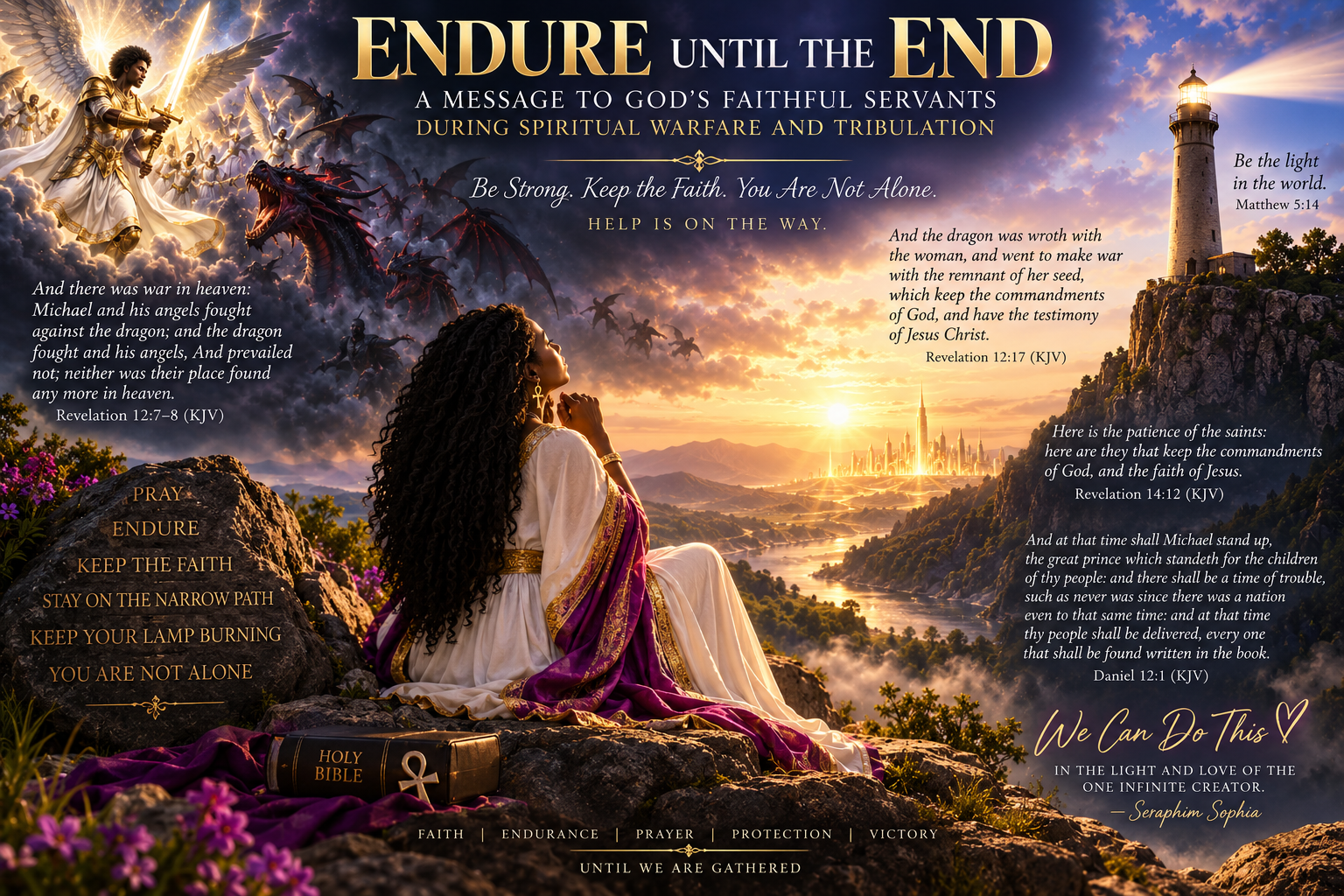
Endure Until the End: A Message to God’s Faithful Servants During Spiritual Warfare and Tribulation

Greetings my dear brothers and sisters in Christ from all around the world. I wanted to share a short message. As I reflected on a few things, I felt moved to share a message with the faithful to keep enduring through any hardships or suffering you may be facing right now. My hope is that you remain strong during times of conflict. Many of us are experiencing intense spiritual battles, which may look different for each of us. We might be struggling in various areas of our lives, but God is guiding us through the Great Tribulation.

Revelation 12 presents a spiritual conflict involving the dragon, Michael and his angels, and people who remain faithful to God.

“And there was war in heaven: Michael and his angels fought against the dragon; and the dragon fought and his angels, And prevailed not; neither was their place found any more in heaven.” – Revelation 12:7–8 (KJV) Then the dragon turns his attention toward God’s people: “And the dragon was wroth with the woman, and went to make war with the remnant of her seed, which keep the commandments of God, and have the testimony of Jesus Christ.” — Revelation 12:17 (KJV)

In those verses you can see that it describes spiritual warfare against faithful servants of God. Those who have been faithful are called the 144,000. “Here is the patience of the saints: here are they that keep the commandments of God, and the faith of Jesus.”— Revelation 14:12 (KJV) We know through scripture that the 144,000 are sealed as belonging to God and the Lamb. Daniel 12 portrays Michael as the great prince who stands for God’s people during an unparalleled time of trouble. Well once God’s people began awakening spiritual warfare increased.

“And at that time shall Michael stand up, the great prince which standeth for the children of thy people: and there shall be a time of trouble, such as never was since there was a nation even to that same time: and at that time thy people shall be delivered, every one that shall be found written in the book.” — Daniel 12:1 (KJV)

During the Great Tribulation, God’s sealed servants stay under His divine protection as they face spiritual opposition. Many of us have experienced this, and God has continued to shield us even in the midst of intense spiritual warfare. This battle has been ongoing and many of us are exhausted. Many of us at times feel like giving up because it seems like it’s just one thing after the other and at times we just don’t know what to do. Many of us have cried out to God and have asked for our deliverance because we want this war to end for good, at least I do. We strive to live in holiness and righteousness, and most of us mind our own business, yet some still face hardship. In times of trouble, we must remain patient, hold on to hope, and keep praying. Brothers and Sisters try to hold on no matter what because God is with us until the end. Even though we have protection it doesn’t mean that we won’t experience spiritual warfare.

This is why we have to endure through the spiritual warfare and remain strong. You can do this. You are not alone. I am here with you enduring through spiritual warfare. IIt’s not easy at all, but I believe God has been protecting me. Sometimes I get scared because there are days when I have no idea what the outcome will be. I just keep praying and hoping I can make it through. The world is changing, and so many people are struggling in different parts of their lives—whether in relationships, finances, or health. Humanity is under attack, with so much happening that makes life hard for everyone. We are living in a world where many people are lawless and they don’t have respect for life at all. God’s people have to be the light in the world. We have to be the lighthouse.

Keep doing what’s right and holy in the sight of the Most High. God sees everything you do, and nothing goes unnoticed. Remember, He is always with you. Keep praying for your brothers and sisters in Christ around the world. Ask God to continue sending His angels to guard us each day. Pray that we stay on the narrow path and remain strong through trials and tribulations. Ask Him to keep giving you strength and keep your lamp burning for God. Until we are gathered I leave you in the light and love of the One Infinite Creator. I love you all! We can do this. Know that help is on the way. – Seraphim Sophia

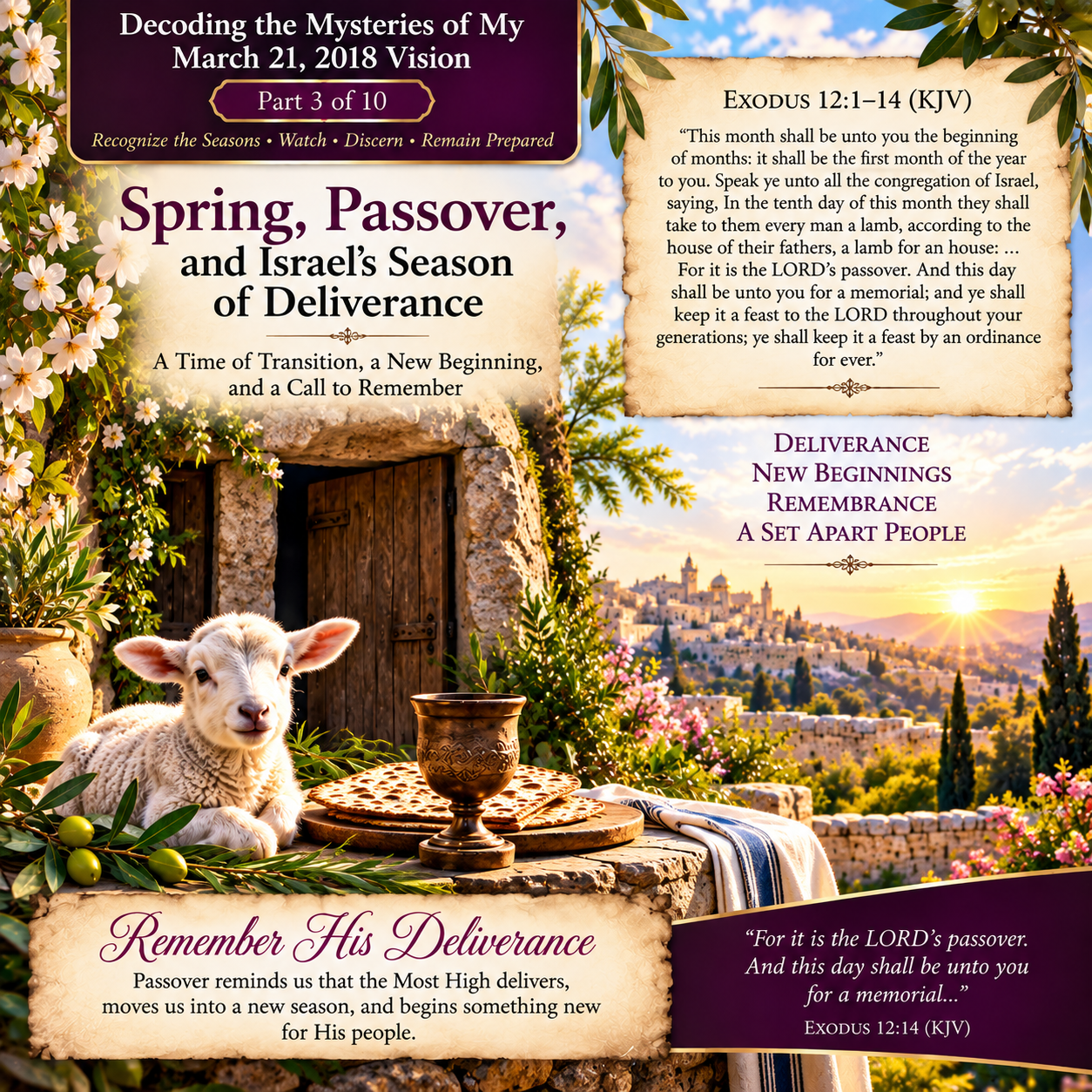
Decoding the Mysteries of My March 21, 2018 Vision: Spring, Passover, and Israel’s Season of Deliverance

Shalom brothers and sisters in Christ from all around the world. I will continue my series of the revelation that was hidden in my dream. Please see other posts.

Preparation for the Wedding Feast: Yahshua Visits Me in a Vision, Riding a White Horse and Clothed in a White Linen Robe

Decoding the Mysteries of My March 21, 2018 Vision: “For Lo, the Winter Is Past” — The Bridegroom Appears at the Beginning of Spring!

Decoding the Mysteries of My March 21, 2018 Vision: “Behold, the Bridegroom Cometh” — Was I Being Shown the Mystery of the Wise Virgins?

In this post, I won’t be continuing the original dream as in previous entries, so I hope the other posts are read to fully grasp the message. As I reflected more on my dream, the arrival of spring revealed even more messages from God, pointing me toward the Spring Feasts. I also realized He visited me on the first day after the Spring Equinox. From the dream, I could see a clear transition from winter into the new season of spring.

The Spring Appointed Times: Deliverance, Firstfruits, and the Beginning of the Harvest

When I look more closely at the biblical calendar, spring carries profound meaning. Leviticus 23 places Passover, the Feast of Unleavened Bread, Firstfruits, and the Feast of Weeks within this opening portion of Israel’s sacred annual cycle. Together, these appointed times form a progression involving deliverance, separation, firstfruits, harvest, and gathering.

Passover and Unleavened Bread — Leviticus 23:4–8

“These are the feasts of the LORD, even holy convocations, which ye shall proclaim in their seasons. In the fourteenth day of the first month at even is the LORD’S passover. And on the fifteenth day of the same month is the feast of unleavened bread unto the LORD: seven days ye must eat unleavened bread. In the first day ye shall have an holy convocation: ye shall do no servile work therein. But ye shall offer an offering made by fire unto the LORD seven days: in the seventh day is an holy convocation: ye shall do no servile work therein.”
— Leviticus 23:4–8 (KJV)

Passover commemorates the great deliverance of the children of Israel from Egypt. It marked a threshold: Israel was leaving bondage behind and beginning a new journey with the Most High. In my own spiritual journey, I experienced a profound transition from my old life into what I understood as a new life in Christ. On July 2, 2012, I rededicated my life to Christ, and that moment became a turning point in my life. I experienced what I understood as deliverance from spiritual bondage, and during that first week, it felt as though God was renewing my mind and changing me from within. In many ways, it felt as though my old self had died and I was awakening into a new life.

During the intense experience that preceded my spiritual awakening and deliverance, there were moments when everything seemed to go completely blank. At times, it felt as though I temporarily lost consciousness. There was darkness—moments when I could not remember anything and everything seemed to become pitch black. In my subconscious, it felt like I had sunk into an underworld or drifted through a realm of total darkness and unconsciousness. I remember wondering afterward if I had died momentarily, because at that particular time, I honestly could not tell what had happened to me. I experienced what felt like coming out of my body, and there was a period of missing time that I could not account for. I had been awake, and then suddenly I lost consciousness. I do not remember the transition from being conscious to losing consciousness, nor can I recall what happened during the period of time that followed.

When I finally woke up, I found myself in another location inside the hospital, surrounded by members of my family. I was taken to the hospital on July 4. I remember being awake before everything went blank, and I remembered waking up afterward, but everything that occurred between those two moments was missing from my memory. I’m not exactly sure what was happening during those three days—July 4, 5, and 6—but symbolically, the experience felt like death, deliverance and resurrection to me. My memories slowly started coming back on the Sabbath, Saturday, July 7, 2012. The darkness felt like the ending of my former life, while the gradual return of consciousness felt like an awakening—a revival and emergence from darkness into light.

As I became fully conscious again, I experienced it as though God were bringing me back to life. My mind was renewed and there was clarity. I felt that I had been given a new beginning and a second chance at life. The person I had been before seemed to be passing away, while something new was awakening within me. Looking back, this experience reminds me of Paul’s words:

“Therefore if any man be in Christ, he is a new creature: old things are passed away; behold, all things are become new.” — 2 Corinthians 5:17 (KJV)

That scripture beautifully captures what the experience came to mean for me, the old life fading away and a new life beginning in Christ. I knew afterward that I wanted to dedicate my life to serving the Most High. I felt that I had been redeemed, awakened, and given another opportunity to live differently. What began in darkness ultimately became, for me, a journey toward light, away from my former life and toward cleansing, transformation, spiritual renewal, and a deeper relationship with God.

When I reflect on Passover and the Exodus it represents deliverance, departure, transition, and a new beginning. On my journey God always led me to the Book of Exodus. Spring was the season of Israel’s deliverance, as described in Exodus 12:1–14. The Exodus was more than just an escape from Egypt; it marked the start of a whole new chapter in Israel’s relationship with God. In the same way, when I was delivered, it signified a fresh beginning in my own relationship with God. In this way, I transitioned from bondage into deliverance.

Then suddenly I moved from deliverance to the beginning of harvest which now we arrive to Firstfruits — Leviticus 23:9–14

“And the LORD spake unto Moses, saying, Speak unto the children of Israel, and say unto them, When ye be come into the land which I give unto you, and shall reap the harvest thereof, then ye shall bring a sheaf of the firstfruits of your harvest unto the priest: And he shall wave the sheaf before the LORD, to be accepted for you: on the morrow after the sabbath the priest shall wave it. And ye shall offer that day when ye wave the sheaf an he lamb without blemish of the first year for a burnt offering unto the LORD. And the meat offering thereof shall be two tenth deals of fine flour mingled with oil, an offering made by fire unto the LORD for a sweet savour: and the drink offering thereof shall be of wine, the fourth part of an hin. And ye shall eat neither bread, nor parched corn, nor green ears, until the selfsame day that ye have brought an offering unto your God: it shall be a statute for ever throughout your generations in all your dwellings.”
— Leviticus 23:9–14 (KJV)

Firstfruits capture another key theme of spring: new growth begins to push through the soil, and the first portion of the coming harvest is given as an offering to God. I suppose God was showing me that I was a part of this coming harvest. In my dream, I saw a sign that winter had ended and spring had arrived. My deliverance came in the form of Yahshua returning on a white horse, dressed in fine white linen. Spring, with its fresh blooms and new life, marked the appearance of the firstfruits and the beginning of the harvest. According to the dream it’s possible I represented the firstfruit and the beginning of the harvest. I say this because he led me to a feast where I had a seat at the banquet table. In my dream, there was mention of the Bride, and he had asked me to be her. It all pointed to Revelation 19, where I would symbolize the Bride preparing herself, though we know this refers to God’s holy people. This leads to the 144,000 as the representation of the Bride.

During the first week of my spiritual awakening and deliverance, I entered into what I experienced as a trance-like state, and my mind felt caught up toward God. During that experience on July 3, 2012, I remember speaking about the 144,000—the 12,000 from each of the twelve tribes of Israel—and sensing that the inner transformation I was experiencing would not be mine alone. I understood what was happening within me as part of a much greater spiritual awakening and transformation. I wasn’t going to be the only one going through an awakening.

On that day I did not know that I was about to undergo an intense process of cleansing, purification, and spiritual transformation. During the trance, I understood the experience as a revelation that I was among the 144,000. This became deeply significant to my spiritual journey and influenced how I later understood the biblical passages concerning the 144,000. Revelation first describes the 144,000 in connection with the twelve tribes of Israel: “And I heard the number of them which were sealed: and there were sealed an hundred and forty and four thousand of all the tribes of the children of Israel.” — Revelation 7:4 (KJV)

Revelation 7:5–8 lists 12,000 sealed from each of the twelve named tribes, adding up to a total of 144,000. The passage that most clearly links the 144,000 to the concept of redemption and firstfruits is found in Revelation 14. “And I looked, and, lo, a Lamb stood on the mount Sion, and with him an hundred forty and four thousand, having his Father’s name written in their foreheads.” — Revelation 14:1 (KJV) Then Revelation explains who they are: “These are they which follow the Lamb whithersoever he goeth. These were redeemed from among men, being the firstfruits unto God and to the Lamb. And in their mouth was found no guile: for they are without fault before the throne of God.” — Revelation 14:4–5 (KJV)

The phrases that really stand out to me are: “Redeemed from among men” and “The firstfruits unto God and to the Lamb.” This adds a new layer to the symbolism of firstfruits. Revelation 14 depicts the 144,000 as “the firstfruits to God and to the Lamb.” During my awakening and deliverance, I realized that God had redeemed me. It hit me many years later that I was one of the redeemed ones. I was presented as one of the firstfruits to God and the Lamb.

Looking back upon what I experienced during that first week of my awakening, I understood my deliverance as coming out of bondage, leaving my old life behind, awakening from darkness, and beginning a new life dedicated to God. During the trance, I understood that the transformation taking place within me was connected to a larger body of people who would also undergo a process of spiritual preparation and transformation. I committed myself to doing the inner work, allowing the Holy Spirit to cleanse, refine, and transform me from within. I understood this process as preparation for ascension and, ultimately, for being part of the great harvest at the end of the age. From my point of view, what I had been learning in biblical prophecy was becoming real and personal, I felt like I was watching it happen in real time and that my own spiritual journey was somehow connected to it.

I’ve come to see myself as one of the Firstfruits, part of the 144,000 who are sealed and belong to God and to Yahshua. We, as the Bride of Christ, symbolize the start of the harvest, but more people will join us, following our example. They too will become faithful servants, just as we have. In the end, there will be a greater harvest, and that is when we will all be gathered together. That will represent the final gathering, the end of the great harvest.

So my dear brothers and sisters Revelation 14 highlights the close relationship between the 144,000 and the Lamb. They stand alongside Him, bear the Father’s name, follow wherever He goes, have been redeemed, are known as firstfruits, and live lives marked by faithfulness. The final message is to remain set apart because you don’t know the final timing of great harvest. When the full number has been reached for the harvest, I suppose that’s when Yahshua will send the angels to gather the elect, all of God’s faithful servants. -Seraphim Sophia

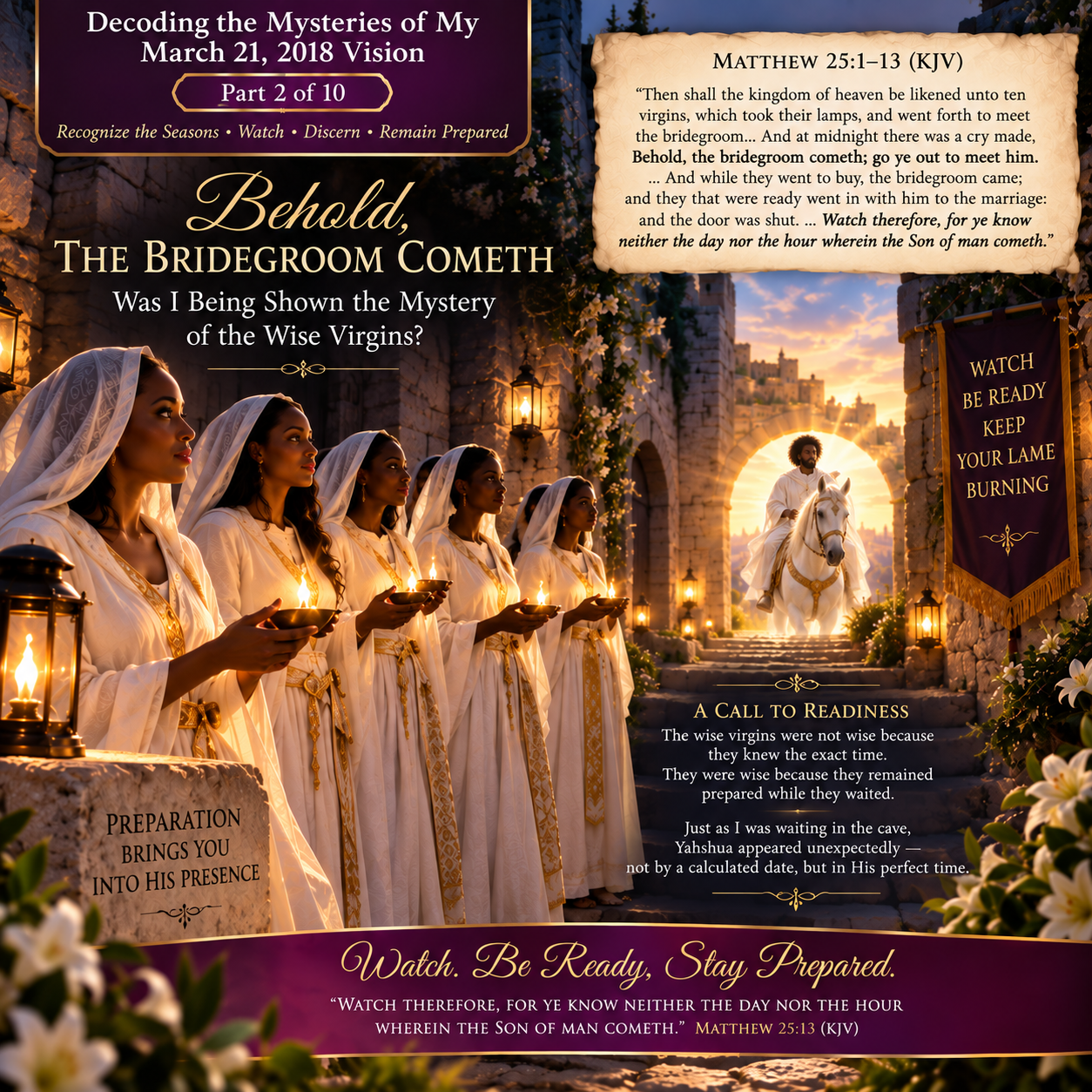
Decoding the Mysteries of My March 21, 2018 Vision: “Behold, the Bridegroom Cometh” — Was I Being Shown the Mystery of the Wise Virgins?

Shalom Brothers and Sisters of Christ from all around the world. Please see previous post Decoding the Mysteries of My March 21, 2018 Vision: “For Lo, the Winter Is Past” — The Bridegroom Appears at the Beginning of Spring!

In my dream I was called to a cave and there I waited for the arrival of Yahshua. Then he appeared. I had previously experienced Yahshua telling me in separate dream that he would return to me. In that dream, I was caught up in a whirlwind and there I appeared inside of a chariot, a heavenly ship above the Earth in space. At the end of our time together on the ship, he told me he would return the next day. After the dream, I waited for his return, unsure of the exact time. Some time passed before he appeared to me unexpectedly in another dream.

In the vision, I stood waiting inside a cave, and when I was called there, Yahshua himself gave me a code to identify him by. When I emerged from the cave, I saw it was truly him on the white horse. He dismounted, took my hand, and led me to a feast. I had been waiting for years, since my last encounter with him on the chariot, not knowing exactly when Yahshua, the Bridegroom, would appear. During that time, I learned to stay watchful. It was all about being ready and prepared for the moment the bridegroom finally arrives. I have been waiting for Yahshua for a long time, and during that period, I became a wise virgin. On my journey, I learned the parable of the ten virgins. The key lesson isn’t about knowing the exact time, but about being prepared before the bridegroom arrives unexpectedly.

“Behold, the Bridegroom Cometh” — Matthew 25:1–13

“Then shall the kingdom of heaven be likened unto ten virgins, which took their lamps, and went forth to meet the bridegroom. And five of them were wise, and five were foolish. They that were foolish took their lamps, and took no oil with them: But the wise took oil in their vessels with their lamps. While the bridegroom tarried, they all slumbered and slept. And at midnight there was a cry made, Behold, the bridegroom cometh; go ye out to meet him. Then all those virgins arose, and trimmed their lamps. And the foolish said unto the wise, Give us of your oil; for our lamps are gone out. But the wise answered, saying, Not so; lest there be not enough for us and you: but go ye rather to them that sell, and buy for yourselves. And while they went to buy, the bridegroom came; and they that were ready went in with him to the marriage: and the door was shut. Afterward came also the other virgins, saying, Lord, Lord, open to us. But he answered and said, Verily I say unto you, I know you not. Watch therefore, for ye know neither the day nor the hour wherein the Son of man cometh.”

As I reflect upon this experience even further, I realize that I was already waiting for Yahshua, much like the wise virgins who waited for the Bridegroom. When he came unexpectedly, I was ready to go with him. And when he led me to the feast, everything had already been prepared. Before this vision, when I met with Yahshua aboard the celestial vessel, he told me that he would return to me tomorrow. Afterward, I thought deeply about the words he spoke to his disciples:

John 14:3: “And if I go and prepare a place for you, I will come again, and receive you unto myself; that where I am, there ye may be also.”

I held this verse close to my heart. I believed that Yahshua would come again, and I wanted to remain ready for whenever that moment came. In my heart, the promise of his return became connected with the hope of joining him at the wedding feast prepared for the Bride. The parable of the wise virgins takes on even greater meaning for me when I look back upon these experiences. The wise virgins were not wise because they calculated when the Bridegroom would arrive. They were wise because they remained prepared while they waited. Their lamps were burning and they had oil with them. When the Bridegroom suddenly appeared, they were ready to go with him.

I also remember another spiritual experience when I was caught up in the Spirit and heard a voice say, “Do not become distracted!” Those words remained with me. I understood them as a reminder to remain focused upon God and upon the spiritual work taking place within me rather than allowing the distractions of the world to pull me away from that path. I had also received a message that after being cleansed, I needed to keep my robe clean. That became deeply meaningful to me. I understood the robe symbolically as representing my spiritual condition before God. If God was cleansing, purifying, and refining me, then I wanted to remain on the narrow path and guard what had been entrusted to me. I wanted to live set apart, continually examining my heart and allowing God to continue transforming me.

In many ways, it felt as though I hid myself away from the world for a season so that I could concentrate upon that cleansing and purification. I desired solitude with the Most High. I wanted to spend time alone with God to pray, seek, learn, heal, change, and allow Him to transform me from within. I dedicated my life to the Most High because I wanted my heart, mind, and spirit to remain centered upon Him. Looking back, I can now see why the imagery of the wise virgins, the clean garment, the Bride, and the prepared wedding feast resonates so strongly with my March 21, 2018 vision. The message I draw from all of these experiences is not about calculating when the Bridegroom will arrive. It is about what we are doing while we wait. So to all my sisters and brothers in Christ, keep your lamp burning and your robe clean. Stay focused and walk the narrow path. Let God continue to cleanse, purify, and refine you. When the Bridegroom arrives, be ready to go with Him. -Seraphim Sophia

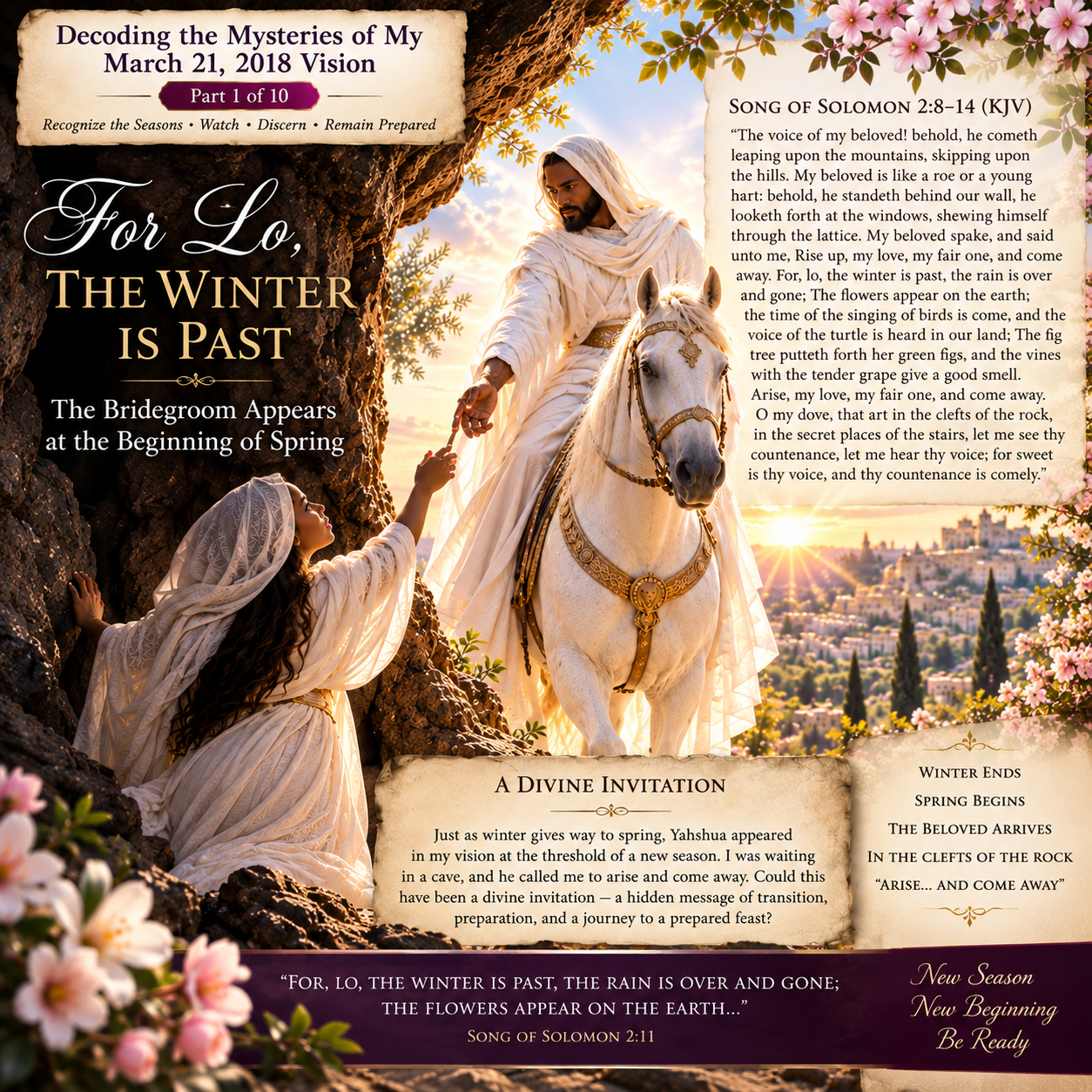
Decoding the Mysteries of My March 21, 2018 Vision: “For Lo, the Winter Is Past” — The Bridegroom Appears at the Beginning of Spring!

Shalom, brothers and sisters in Christ from around the world. I’m delving deeper into the dream I was given, searching for hidden clues and signs within it. It is possible that Yahshua was sending me a hidden message through my dream—something encoded within the timing, setting, symbols, and sequence of events that I did not fully recognize when the vision occurred. Do you notice anything that I cannot yet see? As I reflect upon my March 21, 2018 vision, I am beginning to recognize layers of biblical symbolism that I did not recognize when the vision originally occurred. What especially captures my attention now is not merely what happened in the vision, but when it happened and the order in which everything unfolded.

The vision occurred immediately after the transition from winter into spring. I was waiting inside a cave in an ancient land. Yahshua arrived riding a white horse and clothed in white linen. I came out from the cave, verified the private sign that allowed me to recognize him, and knew that it was safe to go with him. He descended from the horse, took me by the hand, and led me toward a prepared banquet table. I sat at the table while he prepared my meal. It felt as though I had been brought to a sacred wedding feast. Looking back, I wonder whether the mystery is contained not within any single symbol, but within the sequence:

The old season ended. → A new season began. → I waited within the rock. → The Bridegroom appeared. → I came out of concealment. → His identity was confirmed. → He took me by the hand. → I followed him. → He brought me to a prepared table.

That sequence makes me think differently about the dream. Perhaps the seasonal timing itself was part of its symbolism. Perhaps winter ending and spring beginning represented a transition from waiting into fulfillment, concealment into revelation, dormancy into awakening, and death-like stillness into new life. Spring is closely tied to Israel’s biblical story, marking Passover, the Exodus, deliverance, firstfruits, themes of resurrection, and the beginning of the harvest.

I am not trying to calculate the actual day or hour of Yahshua’s return. The precise time is not ours to know but scripture repeatedly teaches us to watch, recognize the season, remain spiritually awake, and be prepared. That distinction is important as I continue discerning what this vision meant to me. I discovered something I had not recognized in 2018: Song of Solomon 2 describes an astonishingly similar sequence. The beloved approaches precisely when winter has ended. Spring has arrived. The fig tree begins producing fruit. The woman is found “in the clefts of the rock,” and her beloved calls to her. In the dream I was waiting in a cave.

“The Winter Is Past” — Song of Solomon 2:8–14 : “The voice of my beloved! behold, he cometh leaping upon the mountains, skipping upon the hills. My beloved is like a roe or a young hart: behold, he standeth behind our wall, he looketh forth at the windows, shewing himself through the lattice. My beloved spake, and said unto me, Rise up, my love, my fair one, and come away. For, lo, the winter is past, the rain is over and gone; The flowers appear on the earth; the time of the singing of birds is come, and the voice of the turtle is heard in our land; The fig tree putteth forth her green figs, and the vines with the tender grape give a good smell. Arise, my love, my fair one, and come away. O my dove, that art in the clefts of the rock, in the secret places of the stairs, let me see thy countenance, let me hear thy voice; for sweet is thy voice, and thy countenance is comely.”In my vision, winter fades and spring begins. I wait in a cave among the rocks until Yahshua arrives. I recognize him instantly, step out of the cave, and take his hand. Together, we walk as he leads me to a feast.

In the Song of Solomon, winter fades and spring emerges, the beloved arrives, the woman is sheltered in the clefts of the rock, and the beloved calls to her, saying, “Rise up… and come away.” What especially amazes me is that my dream occurred on March 21, immediately after the spring equinox. I did not recognize all these connections back in 2018. Looking back, however, I see beautiful symbolism in the Bridegroom appearing as winter gives way to spring and calling the beloved out from the rock to accompany him.

Dear brothers and sisters in Christ, stay grounded in God, remain alert, notice the shifting seasons, and do not follow blindly. Know the Bridegroom and be prepared for his arrival. When he calls, step forward, take his hand, and go where he leads—the feast is already prepared. – Seraphim Sophia

Preparation for the Wedding Feast: Yahshua Visits Me in a Vision, Riding a White Horse and Clothed in a White Linen Robe

Shalom, brothers and sisters in Christ from all around the world. May peace be with you all. I wanted to share a beautiful vision that has remained deeply etched in my mind throughout the years. The vision occurred on Wednesday, March 21, 2018, at the very beginning of spring—the day after the spring equinox on March 20. Looking back at the timing adds another beautiful layer of symbolism to the experience. The spring equinox marks a threshold between seasons. Day and night come into balance, winter comes to an end, and a new season of increasing light, renewal, growth, and new life begins. Seasonal thresholds such as the equinox can be contemplated symbolically as gateways—moments of transition from one cycle into another. My vision occurred immediately after that threshold, as the season of spring had begun.

In the vision, Yahshua visited me riding upon a white horse, clothed in a beautiful white linen robe. The image of him approaching me in this way is something I have never forgotten. I was inside a cave in an ancient land, at a place where Yahshua had instructed me to meet him. The cave itself felt significant. Symbolically, a cave can represent a hidden or protected place—a place of waiting, preparation, retreat, and eventually emergence. I had been waiting there for him.

Yahshua stood behind me, almost like he was overshadowing me, and as I stepped out of the cave, I confirmed a private code he had given me earlier. Once it was verified, I knew in the vision that it was safe to go with him. He got down from the white horse, took my hand, and we walked together toward a banquet table. I sat down while Yahshua went to prepare my meal, and the atmosphere felt like we were part of a sacred feast. Looking back, the imagery strongly reminds me of biblical themes like the Bride, the wedding feast, preparation, and the return of Christ.

Revelation 19 contains remarkably similar symbols. The chapter first speaks about the Marriage Supper of the Lamb and the Bride preparing herself:

“Let us be glad and rejoice, and give honour to him: for the marriage of the Lamb is come, and his wife hath made herself ready.”
— Revelation 19:7

Then the Bride is associated with fine linen, clean and white (Revelation 19:8), followed by the declaration:

“Blessed are they which are called unto the marriage supper of the Lamb.” — Revelation 19:9

And only a few verses later comes the imagery that has always made this particular vision so memorable to me:

“And I saw heaven opened, and behold a white horse…”
— Revelation 19:11

The sequence is beautiful to contemplate: the Bride prepares herself, the marriage supper is announced, heaven opens, and the rider upon the white horse appears.

This is why I have shared this dream so many times throughout the years. For me, it remains one of the most beautiful dreams I have ever experienced. The white horse, white linen, ancient land, cave, private sign of recognition, being taken by the hand, and finally being brought to a prepared table all came together in a way that was unforgettable.

And when I consider that the vision occurred March 21, immediately after the spring equinox, another symbolic pattern emerges. The equinox marked the threshold; then came the beginning of spring—a season traditionally associated with renewal, increasing light, awakening, resurrection, and new life. The timing of the spring equinox has become meaningful to me as I reflect upon the symbolism years later. There was also something much more personal behind my waiting in the cave.

Before this experience, I had another extraordinary dream in which I met with Yahshua aboard what appeared to me as a heavenly vessel or chariot. There was a gathering aboard the vessel, and I had been called there. I was shown different things while aboard, and I remember that I did not want to leave. Yet I eventually had to return. Before departing, Yahshua told me that he would come back to get me tomorrow. At that time, I was really thinking I had 24 hours until his return but of course that wasn’t the case lol. But I was waiting for him and then I realized the 24-hour notice meant his return was soon. After that dream, I remembered his words. I watched, I waited, and some time passed.

Then, unexpectedly, Yahshua appeared again in this March 21, 2018, vision—this time riding upon a white horse. And I was already waiting for him at the cave. When I reflect upon that part of the vision, I cannot help but think about the parable of the wise virgins in Matthew 25. The wise virgins kept their lamps prepared because they did not know precisely when the bridegroom would arrive. Then suddenly the announcement came:

“Behold, the bridegroom cometh; go ye out to meet him.”
— Matthew 25:6

That imagery resonates deeply with how I experienced the dream. I had been told previously that Yahshua would return for me. I did not know when. Yet when he unexpectedly appeared, I was already there waiting. And then he took me by the hand and led me toward the feast. For me, the message I carry from these experiences is ultimately one of preparation. Keep watch, keep your lamp burning, keep your heart prepared and always walk in love, truth, humility, and faithfulness to the Creator. The Bride prepares herself by becoming spiritually ready for the Bridegroom. She is ultimately preparing herself for ascension.

After winter comes spring; after darkness comes increasing light; after waiting comes the appointed season; and after preparation comes the feast. “Blessed are they which are called unto the marriage supper of the Lamb.” — Revelation 19:9 – Seraphim Sophia (Latisha W.)

The First Book of Adam and Eve: The Fall, the 5,500-Year Covenant, and the Promise of Redemption

Greeting my dear brothers and sisters I wanted to share a summary of the First Book of Adam and Eve. Here is a free pdf so that you can read the entire book for yourself. The First Book of Adam and Eve. Early in my journey, I read many books about the plan of salvation for Adam and his descendants. These texts mean a lot to me because they mirror my own path to Christ. After realizing I had sinned, I repented and returned to the covenant, learning so much along the way. I often pray for the gates of Paradise to open again so I can return to that original state I once knew in a higher realm. Reading these works opens my mind to the reality of our original consciousness before entering the physical world. We’ve had to learn so much and strive to stay close to God’s kingdom, avoiding deception from Satan in this life. In today’s world, there’s a lot of deception, and many people have been misled. Many of us have prayed for deliverance and restoration, and it’s deeply meaningful that the Creator sent His Son Yahshua on a divine mission to redeem, restore, and deliver Adam and his righteous descendants. Yahshua has already come to deliver Adam and his righteous descendants. Believers in Christ understand now that the gates of Paradise are open to us if we choose to follow the light of the One Creator and live by His commandments, which are summed up in Love. I hope we all continue to strive to live in holiness and righteousness so that we, too, may ascend to Paradise. Many believe in the second coming of Christ at the end of this age. I picture Yahshua descending from Paradise, with all the saints who have ascended returning alongside him, just as the scriptures say. It would be a descent from Paradise, perhaps through a portal opening in the sky, revealing the heavenly city of New Jerusalem before our eyes. But I will continue to reflect on the scenery of the return of Christ but I want to share information from the First Book of Adam and Eve.

The First Book of Adam and Eve presents an expanded account of Adam and Eve’s life after their departure from the Garden of Eden. Throughout the story, they grieve over the loss of Paradise, their former bright nature, and the heavenly perception they possessed before the Fall. Yet their exile is accompanied by a promise: after an appointed period represented by five and a half days, or 5,500 years within the book’s chronology, the Word will come to save Adam and his righteous descendants. From that point forward, Adam’s earthly life becomes a journey of repentance, prayer, fasting, spiritual conflict, discernment, and learning to live in a mortal body. Running beneath the entire narrative is the expectation that humanity’s fallen condition will eventually be answered by God’s promised restoration.

Chapter 1 — The Cave of Treasures

After Adam and Eve leave Paradise, they enter an unfamiliar world that bears little resemblance to the glorious environment they once knew. God appoints the Cave of Treasures as their earthly dwelling, but Adam initially experiences the cave as dark, restrictive, and sorrowful compared with Eden. Their new surroundings immediately demonstrate how dramatically their condition has changed. Nevertheless, God does not abandon them after their transgression but provides a place where they can live while His purposes concerning them unfold. The Cave of Treasures gradually becomes a sacred place associated with prayer, divine promises, offerings, and the treasures that will later point toward future redemption.

Chapter 2 — From the Bright Nature Into the Earthly Condition

Adam and Eve are overwhelmed by the strange appearance of the earth outside Paradise. The rocks, sand, and physical landscape frighten them because they have never experienced creation from their present condition. Their distress becomes so severe that they collapse as though dead, but God sends His Word to raise them. The chapter begins developing the contrast between Adam’s former bright nature and his present earthly existence. From this point onward, Adam will continually measure his mortal condition against the glorious state he remembers possessing in Paradise.

Chapter 3 — The Promise of the 5,500 Years

God gives Adam one of the central promises of the entire book when He speaks of the “great five and a half days.” Adam initially understands this as only five ordinary days and half of another, but God explains that each prophetic day represents a thousand years, making the appointed period 5,500 years. At the fulfillment of that time, the Word who created Adam will come for his salvation. The promise extends beyond Adam personally to his descendants, establishing restoration as part of the future history of humanity. The 5,500-year covenant consequently becomes the great prophetic thread running throughout the remainder of the story.

Chapter 4 — Adam Mourns His Lost Heavenly Sight

Inside the Cave of Treasures, Adam compares its darkness and narrowness with the beauty and spaciousness of Paradise. He especially mourns the loss of his former ability to perceive heavenly beings and realities. Before the Fall, Adam remembers seeing angels and participating in an existence surrounded by divine light, but his present fleshly condition limits that perception. His grief reveals that the Fall involves much more than removal from a geographical garden. According to the framework of the book, humanity has undergone a profound change of condition involving spiritual perception, bodily existence, and access to the heavenly realm.

Chapter 5 — Eve’s Repentance and Intercession

When Adam collapses from grief, Eve believes he has died and cries out to God for mercy. She acknowledges her involvement in their transgression and recognizes the enormous contrast between the light they possessed before and the darkness surrounding them now. Eve asks God to restore Adam so he can continue seeking forgiveness and repentance. She does not want to continue without him because she remembers that she was taken from his side and that their lives are joined together. This chapter presents Eve not only in connection with the Fall but also as a grieving and repentant woman interceding for her husband.

Chapter 6 — Why the Bright Nature Was Lost

God raises Adam and Eve and explains further what their disobedience has produced. They once possessed a bright nature, but after choosing to transgress God’s command they entered the diminished condition they now experience. God connects their temptation with Satan’s own rebellion and desire for exaltation. The deception promised Adam and Eve something greater, but instead it resulted in the loss of the glory they already possessed. Yet even while explaining the consequences of their choice, God continues preserving them rather than abandoning His creation.

Chapter 7 — God Will Not Break His Covenant

Adam and Eve begin to understand that although they remain outside Paradise, God’s relationship with them has not ended. God reassures Adam that He has made a covenant and will not turn away from it. The restoration Adam desires cannot happen immediately because the appointed five and a half days must first reach their fulfillment. God also places limits upon the animals so they will not simply destroy Adam, Eve, or the righteous descendants who will come from them. The chapter therefore establishes an important distinction between living under the consequences of the Fall and being completely abandoned by God.

Chapter 8 — The Loss of Spiritual Perception

Adam asks why he can no longer see the heavenly world as he once did. God explains that while Adam remained obedient, his bright nature enabled him to perceive realities that his present condition no longer allows him to see in the same way. After the transgression, his perception became restricted according to the flesh. This loss becomes one of Adam’s deepest sources of sorrow because he remembers what direct awareness of the heavenly realm was like. The book therefore describes humanity’s fallen condition as involving a veil between ordinary earthly perception and the higher spiritual realities Adam once experienced openly.

Chapter 9 — The Tree and Water of Life

Adam and Eve encounter waters associated with the region of the Tree of Life, awakening powerful memories of Paradise. What once belonged naturally to their environment has now become inaccessible to them because of their changed condition. Their grief becomes so overwhelming that they fall into the water and nearly die. The Tree and Water of Life begin to emerge as important symbols of everything Adam has lost through the Fall. As the story develops, both will become connected with God’s promise that life will eventually be restored.

Chapter 10 — The Mortal Body

God rescues Adam and Eve and explains that their present bodies now require water and earthly nourishment. These physical needs contrast sharply with the condition Adam remembers possessing in Paradise. Adam again longs to return to the Garden, but God directs him toward the future rather than granting immediate restoration. The promise now includes Adam’s righteous descendants, who will eventually share in what God intends to accomplish. Adam begins learning that his personal salvation is connected with a much larger story involving generations yet unborn.

Chapter 11 — Remembering the Light of Eden

Adam continues remembering the extraordinary brightness of his former existence. Paradise was characterized by light, life, heavenly presence, and an intimacy with creation that he can no longer experience in the same way. The darkness of the Cave of Treasures makes those memories even more painful. Yet remembrance also prevents Adam from becoming satisfied with his fallen condition because he knows something greater once existed. His life now stretches between the Paradise he remembers and the restoration God has promised.

Chapter 12 — The First Night

When darkness falls upon the earth, Adam and Eve initially do not understand what is happening. Adam fears that the light has permanently disappeared and that their condition has become even worse. The darkness is so complete that he cannot see Eve beside him, intensifying his fear and grief. God sends His Word to comfort them and teaches them that earthly darkness has an appointed period. Adam is slowly learning that not every frightening experience outside Paradise represents another divine punishment.

Chapter 13 — Children of Light

God explains the cycle of darkness and returning daylight so Adam will understand that night itself is not permanent abandonment. The discussion also returns to the difference between Adam’s former brightness and Satan’s loss of heavenly glory. The text describes Adam as having been created in connection with light and speaks of children of light coming from him. The idea of righteous descendants therefore begins appearing alongside the promise of future restoration. Humanity’s story will not consist only of corruption; a line of people seeking God will continue through Adam.

Chapter 14 — The Future Coming of the Word

God again directs Adam’s attention toward the future coming of the Word. Adam cannot simply undo the Fall by grieving intensely enough or finding a hidden entrance back into Paradise. The One responsible for his creation will ultimately have to intervene in his fallen condition. This makes the covenant increasingly redemptive rather than merely chronological. Adam’s hope rests not in his ability to reverse what happened but in God’s promise to act at the appointed time.

Chapter 15 — The Return of Daylight

Adam eventually witnesses the sunrise and discovers that the darkness he feared was temporary. The returning light brings comfort because it teaches him something about earthly existence that he did not previously understand. His first night outside Eden becomes a lesson about fear, perception, and trust. Adam had interpreted darkness as though light had been permanently removed, yet morning proves otherwise. The experience begins teaching him that what appears final from within his limited earthly perspective may not actually be final.

Chapter 16 — Adam and Eve Begin Their Fast

Adam and Eve decide to undertake an intense period of fasting and prayer as an expression of repentance. Adam enters the Jordan while Eve enters another river, and both seek God’s mercy concerning their transgression. They hope that through humility and repentance they might find restoration and forgiveness. Their actions show that they refuse to become spiritually indifferent to what happened in Eden. Fasting now becomes one of the repeated practices through which Adam and Eve express sorrow, discipline, and their desire to return toward God.

Chapter 17 — Creation Joins Adam’s Prayer

While standing in the water, Adam calls upon the creatures around him to participate in praising the Creator. The scene presents creation as a witness to humanity’s repentance and longing for reconciliation. Adam, who once exercised dominion from within Paradise, now stands humbly among earthly creatures seeking mercy. Although his relationship with creation has changed, he still understands creation as belonging to God and capable of joining in praise. His spiritual response to the Fall therefore includes bringing his sorrow before the Creator rather than turning completely away from Him.

Chapter 18 — Satan Appears as an Angel of Light

Satan approaches Eve during her fast but does not appear in an obviously threatening form. Instead, he disguises himself as an angel of light and announces that God has supposedly accepted their repentance. Eve believes the message and leaves the water before completing the appointed period. The incident introduces one of the strongest themes in the entire book: spiritual deception can imitate heavenly appearance and religious language. Adam and Eve must therefore learn that supernatural appearance alone does not prove that a message comes from God.

Chapter 19 — Adam Recognizes Satan’s Deception

When Eve reaches Adam, he realizes that Satan has deceived her and interrupted her fast. Adam confronts Satan and asks why he continues persecuting them after they have already lost Paradise and their former glory. The question exposes Adam’s growing awareness that something larger lies behind Satan’s hostility toward humanity. Satan’s answer will connect Adam’s suffering with events that occurred before the human Fall. The spiritual conflict surrounding Adam is therefore rooted in an older rebellion.

Chapter 20 — Satan Explains His Rebellion

Satan tells Adam that his hostility began when Adam was created in God’s image and the heavenly beings were commanded to honor God’s work in him. Satan refused because he considered himself greater and would not humble himself before Adam. His pride resulted in the loss of his heavenly position, and seeing Adam placed in Paradise intensified his envy. Satan therefore sought to make Adam lose the glory and dwelling that Satan himself had lost. Within the framework of the book, the temptation in Eden is consequently presented as part of a conflict driven by pride, jealousy, and resentment.

Chapter 21 — Adam Turns to God for Protection

After hearing Satan’s explanation, Adam recognizes that he cannot navigate this spiritual conflict by relying solely upon himself. He turns toward God for protection and guidance. Adam now understands that the being opposing him possesses knowledge of heavenly things and is capable of deception. His response is increasingly to seek the Creator rather than attempt to defeat the adversary through his own power. Dependence upon God becomes essential to surviving both the physical and spiritual dangers of life outside Paradise.

Chapter 22 — Adam Continues His Repentance

Adam remains committed to repentance even after Satan’s interference. The hardships surrounding him do not eliminate his desire to seek reconciliation with God. He continues praying and humbling himself while learning that repentance does not instantly erase every consequence of the Fall. The bright nature is not immediately restored, and Paradise remains closed. Adam must therefore learn how to remain faithful even when the restoration he desires has not yet appeared.

Chapter 23 — Eve Shares Adam’s Sorrow

Eve continues sharing Adam’s grief and repentance as they struggle to understand their new earthly condition. Their suffering is not merely individual because the consequences of their transgression affect them together. Eve repeatedly participates in prayer, fasting, and their search for God’s mercy. The relationship between Adam and Eve therefore becomes one of mutual suffering as well as companionship. Together they must learn how to live outside the Garden while remembering the promise that their exile will not continue forever.

Chapter 24 — Satan Continues His War Against Adam

Satan refuses to leave Adam and Eve in peace and repeatedly looks for ways to weaken their trust in God. His attacks alternate between physical danger, fear, false appearances, and spiritual deception. The book portrays this conflict as persistent because Satan understands that Adam remains connected with a future divine promise. Adam consequently begins discovering that spiritual warfare does not always appear in the same form. Discernment requires recognizing the adversary even when his method changes.

Chapter 25 — God Preserves Adam and Eve

Despite Satan’s repeated efforts, Adam and Eve continue being preserved. God intervenes when their lives are threatened and prevents Satan from completely destroying them. These rescues gradually teach Adam that divine protection remains active even though he has not yet been restored to Paradise. The covenant therefore functions not only as a distant future promise but also as a reason Adam’s life continues in the present. God preserves the human family through which the future promise will unfold.

Chapter 26 — Adam Learns to Wait

Adam repeatedly wants immediate restoration, but God continues teaching him that the appointed time cannot simply be bypassed. His repentance is real, yet the covenant has its own fulfillment. Waiting becomes one of Adam’s most difficult spiritual disciplines because he remembers exactly what he has lost. The story therefore distinguishes between forgiveness, preservation, and complete restoration. Adam may receive mercy now while still waiting for the larger promise concerning the future.

Chapter 27 — The Cave Becomes a Sacred Place

The Cave of Treasures gradually takes on a different meaning for Adam and Eve. What initially appeared only as a dark prison outside Paradise becomes a place where they encounter God, pray, and preserve sacred memories. Their earthly dwelling cannot replace Eden, but it becomes a place where they can continue seeking the Creator. This transformation shows Adam learning to recognize God’s presence even outside the environment he considers ideal. The cave becomes connected with the covenant rather than merely with exile.

Chapter 28 — Adam’s Dependence Upon God’s Word

Throughout these experiences Adam repeatedly collapses physically or emotionally, and God’s Word raises and strengthens him. The repeated pattern emphasizes Adam’s weakness in his present condition. He cannot sustain himself through memory of his former glory alone. Each intervention reinforces the connection between the Word who created Adam and the Word who will eventually accomplish his promised salvation. The book is steadily preparing the reader for the future redemptive role assigned to the Word.

Chapter 29 — Satan Cannot Cancel the Promise

Satan’s attacks become increasingly severe, yet none succeeds in destroying the covenant God has established. Adam may be deceived, wounded, frightened, or weakened, but God repeatedly restores him. The narrative therefore places limits around Satan’s power: he can oppose Adam, but he cannot independently overturn God’s promise. Adam gradually learns this through experience rather than through a single revelation. His survival becomes continuing evidence that the covenant remains active.

Chapter 30 — Preparing for the Treasures

As Adam and Eve continue seeking God, the Cave of Treasures becomes the setting for signs that will point beyond their present suffering. Their earthly life is still difficult, but God begins providing tangible reminders of what He has promised for the future. These treasures will not themselves restore Adam, but they will help preserve the memory of the covenant. The narrative is therefore transitioning from general promises toward increasingly specific prophetic signs. Those signs become explicit in the following chapter through gold, incense, and myrrh.

Chapter 31 — Gold, Incense, and Myrrh

God explains the meaning of the treasures given to Adam: gold, incense, and myrrh. Within the book, gold points toward the future kingdom, incense toward divinity, and myrrh toward suffering and death associated with God’s coming in the flesh. Their arrival around the third day after Adam’s expulsion is also given prophetic meaning connected with the future three days associated with the Lord in the earth. The treasures therefore become more than objects of comfort for Adam. They are signs preserved inside the Cave of Treasures that point toward the future fulfillment of his salvation.

Chapter 32 — Adam and Eve Return to Fasting

Adam and Eve undertake another period of fasting and prayer because their desire for restoration remains intense. They continue hoping that God will forgive their transgression and return them to their former condition. Their willingness to repeat these practices demonstrates persistence, but it also shows that they have not yet fully understood the timetable of the covenant. Adam and Eve still hope their suffering might accelerate their restoration. Their fast becomes the setting for another test of spiritual discernment.

Chapter 33 — Another Counterfeit Angel

Satan again approaches Eve in angelic form and claims that God has accepted their repentance. He strengthens the deception by describing genuine details concerning the treasures and previous heavenly events. Because the information is accurate, Eve assumes the messenger must be genuine and follows him. Adam later recognizes what has happened and grieves over the interrupted vow. The chapter warns within its own narrative that accurate spiritual information can still be used deceptively when it is joined with a false message.

Chapter 34 — Adam Remembers His Original Creation

Adam recounts his creation and the condition he possessed before the Fall. He remembers knowledge, authority over the animals, spiritual perception, and the bright nature that distinguished his existence in Paradise. He contrasts this with hunger, thirst, weakness, exhaustion, sorrow, and other experiences of mortal life. His prayer provides one of the clearest descriptions in the book of what humanity supposedly lost through transgression. Adam’s hope for salvation is therefore inseparable from his longing for restoration of the original human condition.

Chapter 35 — God Explains the Present Condition

God reminds Adam that his present suffering belongs to the earthly condition he entered after leaving Paradise. Hunger, thirst, bodily weakness, and the need for sleep were not experienced in the same way during his former existence. Adam is now living in what the text repeatedly describes as a strange land. The chapter reinforces that exile involves both location and embodiment. Adam must learn how to exist in this new condition until the covenant reaches fulfillment.

Chapter 36 — The Figs From Paradise

God commands a cherub to bring Adam and Eve figs from the Garden. The heavenly being cannot approach them normally because their flesh cannot endure the cherub’s fire, so the figs are delivered from a distance. The narrator emphasizes a dramatic reversal: heavenly beings once trembled before Adam, but Adam now trembles before them. Even God’s provision of food reminds Adam of the difference between his former and present nature. The figs therefore become both nourishment and a painful reminder of Paradise.

Chapter 37 — Adam Asks for the Tree of Life

Adam hesitates to eat the figs and instead asks God for fruit from the Tree of Life. He reasons that he and Eve have spent many days fasting and repenting for the transgression they committed in a short period. Adam hopes that their prolonged suffering might compensate for what happened and allow them to recover eternal life. His request reveals that he is still trying to understand whether restoration can be obtained through his own penitential effort. God’s answer establishes that the Tree of Life will be restored only according to the covenant.

Chapter 38 — The 5,500 Years and Eternal Life

God tells Adam that he cannot receive the Tree of Life at the present time. When the 5,500 years are fulfilled, however, Adam will receive its fruit together with Eve and their righteous descendants. They will then live forever according to the promise given in the book. Adam is instructed to endure until the covenant reaches its appointed fulfillment. The 5,500-year prophecy is therefore explicitly connected with the recovery of the eternal life lost through the Fall.

Chapter 39 — Adam Becomes Afraid to Eat

Adam becomes frightened by the idea of eating because his original transgression involved forbidden fruit. Even food that God has permitted now awakens anxiety within him. His fear demonstrates that the Fall has affected his consciousness as well as his body and environment. Adam asks God whether he can somehow survive without eating the figs. The experience teaches him that obedience, rather than eating itself, was the true issue surrounding the original command.

Chapter 40 — The Needs of the Earthly Body

God explains that Adam’s present body requires earthly food in order to survive. His former bright condition did not depend upon nourishment in the same manner, but his mortal body now belongs to an earthly order. Adam must therefore accept food as part of living responsibly in his changed condition. The lesson is another step in his adaptation to life outside Eden. He cannot live as though his body still possesses the qualities it had before the Fall.

Chapter 41 — Adam Seeks the Water of Life

Adam next asks for the Water of Life, hoping that it might restore him and free him from mortality. He travels toward the waters flowing from the Garden and remembers that thirst did not trouble him during his former existence. Adam even asks God to place him somewhere else if he cannot return to Paradise. His longing reveals that he still associates salvation with recovering the life-giving realities he once possessed. God’s answer transforms that longing into a prophecy of a much greater future deliverance.

Chapter 42 — The Descent Into Hell and the Water of Life

God tells Adam that true rest ultimately belongs to the Kingdom of Heaven rather than another earthly country. The text then declares that God will one day descend into Hell, break its gates, and save Adam’s soul together with the souls of the righteous. The Water of Life Adam seeks is also connected with the blood God says He will shed at Golgotha when He comes to Earth. The promise of the 5,500 years has therefore become a detailed prophecy involving death, descent, liberation, and restoration. Adam learns that his ultimate deliverance will come not through escaping earthly difficulty but through God’s future victory over the condition holding the dead.

Chapter 43 — Fire Surrounds the Cave

Satan gathers combustible materials and surrounds the Cave of Treasures with fire. Adam initially assumes that God has caused the disaster and fears that he is being driven even farther from Paradise. Satan’s deeper purpose is to make Adam believe that God has abandoned him so that he will lose faith in the covenant. God protects the cave and prevents the fire from accomplishing Satan’s intention. Adam again must learn not to attribute every frightening event to God.

Chapter 44 — Adam Realizes That He Has Changed

As Adam observes the fire, he reflects upon the difference between his former relationship with creation and his present vulnerability. Fire itself has not fundamentally changed; Adam’s condition has changed. The body he now possesses can be burned and injured in ways his former bright nature did not experience. This realization deepens his understanding of what the Fall has done. The physical world continually mirrors back to Adam the limitations of his mortal condition.

Chapter 45 — The Fire Becomes a Sign of Hell

God uses the fire surrounding the cave as a teaching sign concerning Adam’s future. Just as Adam cannot create his own path through the flames, he will not be able to deliver himself from the condition awaiting him after death. His future escape will depend upon the coming of God’s Word and fulfillment of the covenant. God then divides the fire so Adam can safely pass through it. The physical rescue becomes a prophetic demonstration that God will one day open a way where Adam cannot open one himself.

Chapter 46 — Satan Attacks the Opened Way

Even after God opens a path through the fire, Satan attempts to injure Adam and Eve by causing the flames to surge toward them. Their bodies are burned until God intervenes and sends help. God then reminds Adam and Eve of the contrast between Satan’s promises and Satan’s actual behavior toward them. The being who claimed to offer exaltation continually attempts to destroy them, while God repeatedly preserves them. Their suffering becomes another lesson in judging spiritual claims by what they actually produce.

Chapter 47 — Satan Understands the Covenant

The narrative reveals that Satan understands the significance of God’s promise to Adam. He knows Adam has been promised future salvation and that righteous descendants will inherit what Satan lost. Satan therefore reasons that killing Adam before he produces children might prevent the promised descendants from appearing. His opposition to Adam becomes explicitly connected with opposition to the covenant. The survival of Adam and Eve is consequently necessary for the future human family described in God’s promise.

Chapter 48 — The Great Rock

Satan and his hosts attempt to crush Adam and Eve beneath an enormous rock while they sleep. Instead of allowing the rock to destroy them, God transforms it into a protective covering while lowering the ground beneath them. Adam awakens frightened and initially wonders whether God has imprisoned him because of another transgression. Once again Satan’s attempted destruction becomes something God turns toward preservation. The rock then becomes the basis for one of the book’s most explicit prophetic signs.

Chapter 49 — The Tomb and Resurrection

God tells Adam that his experience beneath the rock foreshadows what will happen when God comes upon Earth. He will be put to death, placed within a rock or tomb, and sealed behind a great stone. The text says He will remain there for three days and three nights and then rise on the third day. God directly connects this future resurrection with salvation for Adam and those descendants who believe. Adam’s own confinement beneath the rock therefore becomes a prophetic sign of burial, resurrection, and the fulfillment of the covenant.

Chapter 50 — The Need for Earthly Clothing

Adam and Eve recognize that their present bodies require garments. Their former bright nature had provided a condition of glory that no longer surrounds them. God directs them toward sheepskins that can be used as clothing. The need for physical garments becomes another visible sign of their mortality and changed bodily condition. Adam is learning that earthly life requires practical provisions that were unnecessary in Paradise.

Chapter 51 — Satan Is Exposed

Satan attempts to interfere with Adam and Eve obtaining the sheepskins, but God restrains him. Adam and Eve are allowed to see the adversary in his fallen condition rather than the beautiful forms he repeatedly assumes. God reminds them that this is the being who promised them glory and divinity while actually contributing to their loss of the garment of light. The contrast between appearance and reality becomes unmistakable. Satan can imitate beauty, but God exposes the condition hidden beneath the disguise.

Chapter 52 — The Garments of Skin

An angel teaches Adam how to prepare the sheepskins and turn them into garments. Adam recognizes that these skins once belonged to living animals that have now died, making the clothing a reminder of mortality. The garments stand in sharp contrast with the bright nature Adam and Eve possessed before the Fall. Nevertheless, God provides what they need within their present condition rather than leaving them naked and helpless. Divine care continues even though complete restoration remains future.

Chapter 53 — The Western Lands and the Flood

Adam and Eve wander westward, where Satan again attempts to frighten them through deceptive appearances. God instructs Adam to return toward the place appointed for him and reveals something about the future of his descendants. Humanity will multiply, but corruption will eventually spread among them and a great flood will come. A righteous remnant, however, will be preserved. The history of Adam’s descendants is therefore already presented as containing both corruption and divine preservation.

Chapter 54 — Adam Approaches Paradise Again

Adam and Eve eventually approach the border of Paradise once more. The cherub guarding the Garden prepares to prevent their entrance, but the scene causes uncertainty among the heavenly beings because they wonder whether Adam’s restoration has finally arrived. Adam and Eve collapse from fear and longing as the angels observe them. The moment dramatizes the great question running through the entire narrative: when will Adam return? God’s answer again directs everyone toward the covenant.

Chapter 55 — Only When the Covenant Is Fulfilled

God tells Adam plainly that his return to Paradise cannot happen yet. He may enter only when the covenant made concerning him reaches fulfillment. Adam hears the angels around him but cannot see them, causing him to grieve once more over the loss of his bright nature. The angels themselves intercede for Adam and ask God to preserve him until the promise is completed. Both heaven and earth therefore appear within the story as waiting for the appointed restoration.

Chapter 56 — Adam Is Comforted

God continues comforting Adam while reminding him that his present condition differs from Paradise. Adam must live within earthly limitations even though he remembers something greater. His hope cannot depend upon immediately recovering everything he lost. Instead, he must learn endurance while trusting that God has not forgotten the covenant. Waiting becomes an essential part of Adam’s spiritual development.

Chapter 57 — Prayer Outside Paradise

Adam and Eve continue establishing patterns of prayer outside the Garden. Paradise remains inaccessible, yet communion with God has not completely disappeared. The Cave of Treasures and places of offering become locations where they repeatedly turn toward the Creator. Adam begins discovering that exile does not prevent worship. He can seek God even while awaiting the larger restoration he cannot yet possess.

Chapter 58 — Offerings and Remembrance

Adam increasingly uses offerings as expressions of gratitude, repentance, and dependence upon God. These practices help organize his spiritual life outside Eden. The offerings cannot themselves reopen Paradise, but they become signs of Adam’s continuing relationship with the Creator. His worship is therefore oriented toward both remembrance and hope. Adam remembers what was lost while trusting what God has promised for the future.

Chapter 59 — Learning Earthly Obedience

Adam’s experiences continue teaching him that faithfulness outside Paradise requires practical obedience. He must not simply long for the past but learn how God wants him to live in the present. This includes prayer, work, restraint, and dependence upon divine instruction. His earthly life gradually becomes a school of spiritual formation. The man who failed a command in Eden is learning to wait for God’s direction before acting.

Chapter 60 — God’s Provision Continues

God continues providing for Adam and Eve even though their environment remains difficult. Their survival depends upon learning how to receive and use what the earth provides. Each act of provision demonstrates that the Creator has not abandoned them simply because they are outside the Garden. At the same time, provision is not the same as full restoration. Adam receives what he needs for mortal life while continuing to await eternal life.

Chapter 61 — Adam Faces the Reality of Labor

Earthly survival increasingly requires Adam to work. This is a major contrast with the abundance he remembers in Paradise. His mortal body becomes tired, hungry, and dependent upon the results of physical labor. Yet labor also becomes part of Adam’s education concerning earthly life. He must learn how to participate actively in sustaining the life God continues preserving.

Chapter 62 — The Earth Must Now Be Worked

Adam recognizes that food will not simply appear in the same manner as the abundance he experienced in Eden. The earth must be approached through work, knowledge, and patience. His relationship with the ground therefore reflects his changed condition after the Fall. The same earth from which Adam was formed now becomes the source from which his mortal body must obtain nourishment. Humanity’s earthly vocation begins developing alongside its spiritual longing for restoration.

Chapter 63 — God Teaches Adam

Rather than leaving Adam completely without knowledge, God continues instructing him in the skills necessary for earthly survival. Adam must learn things he never needed to know while living in Paradise. This divine instruction shows that God’s relationship with humanity includes practical guidance as well as spiritual promises. Adam’s education now concerns both heaven and earth. He is being taught how to survive below while continuing to hope for what is above.

Chapter 64 — Grain and the Promise of Bread

Adam discovers grain and begins learning that it can become nourishment for his body. The process requires knowledge, effort, and patience. What appears ordinary to later humanity is entirely new within Adam’s experience. God gives him understanding concerning how the grain should be handled. Bread thus enters the story as part of God’s provision for mortal life and will soon acquire a deeper prophetic meaning.

Chapter 65 — Adam Learns to Make Bread

Adam works with the grain until it can be prepared as bread. The labor exhausts him, demonstrating again the limitations of his present body. Yet he also experiences joy because he has learned something necessary for survival. The chapter portrays knowledge of earthly crafts as part of humanity’s adaptation after Eden. Adam is becoming not merely the first exile from Paradise but also the first learner of the practices through which earthly civilization will continue.

Chapter 66 — Provision in the Strange Land

The availability of grain and other food teaches Adam that the earth outside Paradise, though difficult, is not entirely without provision. God continues sustaining Adam within the strange land even while withholding immediate access to the Tree of Life. This distinction becomes important throughout the book. Earthly food preserves mortal existence, while the Tree and Water of Life symbolize the greater restoration still to come. Adam must receive one while waiting for the other.

Chapter 67 — Satan Burns the Wheat

After Adam gathers wheat, Satan burns it and empties the available water. Satan then appears with his hosts as angels praising God and claims that God has sent them to lead Adam toward better provision. Adam believes the deception and follows them for days until he and Eve collapse from hunger and exhaustion. The episode is one of the clearest warnings in the book concerning counterfeit spiritual guidance. Satan imitates worship, angelic appearance, and divine authority while actually leading Adam away from what God provided.

Chapter 68 — God Reveals the Deception

God raises Adam and explains that He did not burn the wheat, empty the water, or send the apparent angels. Satan was responsible for the destruction and deception. God restores the provision and sends genuine heavenly assistance, teaching Adam again to distinguish divine action from counterfeit spiritual claims. Adam then offers grain to God, and the offering receives heavenly blessing. The book connects this offering with God’s future flesh, allowing bread to become another sign pointing toward the promised redemption.

Chapter 69 — Blood and Water From Adam’s Side

While Adam makes an offering, Satan pierces him in the right side and blood and water flow from the wound. Adam collapses upon the altar, but God’s Word raises and heals him. God explicitly tells Adam that this event points toward what will happen when He comes upon Earth and is Himself pierced. Blood and water will flow from His side, and His body will become the true offering. Adam’s own suffering therefore becomes another prophetic sign of the future work through which the covenant will be fulfilled.

Chapter 70 — Satan Counterfeits the Three Angels

Satan and two companions take forms resembling the three genuine angels associated with the gold, incense, and myrrh. They approach Adam with a supposed message from God concerning marriage and pressure him into promising obedience before hearing the full instruction. Their strategy depends upon Adam recognizing a familiar heavenly pattern and assuming the imitation must be genuine. Satan is therefore counterfeiting not merely angelic appearance but a previous authentic experience. Adam’s growing discernment will determine whether the deception succeeds.

Chapter 71 — Adam Tests the Message

After hearing the supposed command, Adam becomes suspicious because God Himself has not spoken to him concerning the matter. He realizes that the apparent angels are deceptive beings and refuses to obey them. Adam is troubled because he invoked God’s name during the encounter, so he returns to fasting and prayer. God forgives and warns him again concerning Satan. This chapter marks significant spiritual growth because Adam is finally learning to test a message rather than trusting appearance alone.

Chapter 72 — Satan Appears as Beautiful Human Beings

Satan tries another method by appearing with his hosts as beautiful men and women who seem to have families of their own. They encourage Adam to join with Eve and produce children as they supposedly have done. Adam experiences bodily desire but refuses to allow desire or external example to become his authority. Instead, he returns to God and asks directly what he should do. The chapter reinforces Adam’s developing principle of waiting for divine instruction rather than allowing appearances, impulses, or spiritual beings to determine his actions.

Chapter 73 — God Establishes Adam and Eve’s Marriage

God responds to Adam’s prayer by sending genuine heavenly messengers with instructions concerning his union with Eve. Adam now receives from God what Satan had previously attempted to make him do without divine authorization. Adam and Eve pray and fast before entering their marriage, and their union is described as pure and directed toward producing descendants. The chapter therefore distinguishes the act itself from the question of obedience surrounding it. Adam’s victory lies in waiting until he receives genuine direction rather than repeating the impulsive disobedience associated with Eden.

Chapter 74 — Cain and Luluwa Are Born

Eve eventually becomes pregnant and experiences the suffering associated with childbirth in the mortal condition. She gives birth to twins, Cain and Luluwa, beginning the first generation born outside Paradise. Adam and Eve respond by turning toward God and making offerings concerning their children. The descendants previously spoken about only in prophecy now actually appear within the story. The covenant is beginning to move through generations rather than remaining solely a promise made to Adam.

Chapter 75 — Abel and Aklia Are Born

Eve later gives birth to another pair, Abel and Aklia. Adam continues the practice of making offerings and bringing his children into connection with the Cave of Treasures and the sacred signs preserved there. The first human family is now established outside Paradise. Adam and Eve must not only navigate their own relationship with God but also teach the next generation about what happened and what has been promised. The question of righteous descendants now becomes central to the narrative.

Chapter 76 — Abel Chooses Prayer

Cain and Abel develop very different spiritual dispositions. Abel is portrayed as meek, obedient, devoted to fasting, prayer, and offerings, while Cain increasingly displays hardness of heart. Adam teaches Abel about Paradise, the Fall, and the treasures connected with God’s promise. When Satan threatens Abel, Abel refuses to believe him and turns toward God instead. The righteous descendant is therefore shown learning the discernment that Adam himself struggled so long to acquire.

Chapter 77 — Cain and Abel’s Offerings

Adam encourages both sons to make offerings to God. Abel approaches worship sincerely, and the book emphasizes that God is pleased not merely with the gift but with Abel’s good heart. Cain’s offering is rejected because his heart is already occupied with jealousy and murderous thoughts. God nevertheless gives Cain an opportunity to change and become righteous. The chapter therefore presents the outward offering as inseparable from the inward condition of the person presenting it.

Chapter 78 — Cain’s Jealousy Deepens

Satan repeatedly feeds Cain’s resentment toward Abel, especially concerning family affection, marriage, and the acceptance of Abel’s offering. Cain begins interpreting Abel’s blessings as though they diminish his own worth and place within the family. Rather than correcting his heart when God gives him the opportunity, he allows jealousy to become anger and anger to become hatred. Satan then encourages him toward violence while Cain increasingly accepts the suggestion. The chapter shows temptation developing gradually from an external suggestion into an internal decision.

Chapter 79 — Cain Murders Abel

Cain deceives Abel by pretending friendship and leading him into an isolated place. Once they are alone, Cain attacks and kills his brother, bringing the first murder into the human family. Abel’s blood cries from the earth, and the ground repeatedly refuses to conceal his body, making his death a witness against Cain. God asks Cain where his brother is, giving him an opportunity to confess, but Cain responds by asking whether he is his brother’s keeper. The book ends with Cain refusing repentance and entering a condition of trembling and lost peace, while the larger promise of Adam’s future restoration remains unfulfilled.

The Great Promise Running Through the Story

From Chapter 1 through Chapter 79, The First Book of Adam and Eve presents human existence after the Fall as a long movement between lost Paradise and promised restoration. Adam remembers a bright nature, spiritual perception, freedom from ordinary bodily suffering, access to the Tree and Water of Life, and direct awareness of the heavenly realm. Outside Paradise he encounters darkness, hunger, thirst, mortality, labor, spiritual deception, bodily weakness, and eventually death within his own family. Yet the story never allows those conditions to erase the covenant God established near the beginning.

The 5,500-year promise becomes the thread holding Adam’s hope together. God repeatedly tells him that the appointed time must be fulfilled before complete restoration occurs. Adam cannot return to Paradise simply because he desires it, nor can prolonged fasting, suffering, or repentance give him immediate access to the Tree of Life. He must endure while trusting that the Word who created him will eventually accomplish what Adam cannot accomplish for himself. The covenant therefore transforms Adam’s life into a period of waiting, learning, repentance, and preparation.

As the chapters progress, the promise becomes increasingly specific. The Word will come in the flesh; suffering and death are foretold; Golgotha and blood are connected with the Water of Life; a pierced side produces blood and water; burial within a rock and resurrection on the third day are foreshadowed; and God promises to descend into Hell, break its gates, and deliver Adam and the righteous. The Tree of Life that Adam cannot presently receive is ultimately promised to him, Eve, and their righteous descendants. Within the framework of this book, redemption therefore means far more than simply returning Adam geographically to the original Garden—it means overcoming the entire condition produced by the Fall.

Adam’s experiences repeatedly become prophetic signs of this future restoration. The gold, incense, and myrrh point toward kingdom, divinity, suffering, and death. The rock points toward the tomb, while Adam’s emergence after three days points toward resurrection. The Water of Life becomes connected with the blood shed at Golgotha, the grain offering becomes associated with the future flesh of the Savior, and the blood and water flowing from Adam’s pierced side foreshadow another future piercing. Adam is therefore not merely told that deliverance will happen; events within his own life continually dramatize aspects of what the promised deliverance will involve.

Another major theme running throughout the book is spiritual discernment. Satan repeatedly appears in forms that seem holy, beautiful, or trustworthy. He appears as an angel of light, imitates genuine angels, praises God, possesses accurate information, and sometimes presents an idea that is not inherently wrong while falsely claiming that God commanded it. Adam initially struggles greatly with these deceptions, but over time he learns an important lesson: a spiritual appearance, supernatural experience, or religious claim should not automatically be treated as God’s Word. By the later chapters, Adam increasingly waits for genuine divine instruction before acting.

The story also demonstrates the difference between falling and refusing to return. Adam and Eve repeatedly make mistakes and experience deception, but they continually return toward God through confession, prayer, fasting, and repentance. Cain follows another path. His jealousy becomes hatred, hatred becomes murder, and when God confronts him he refuses the opportunity to confess. The book consequently ends not with the fulfillment of the 5,500-year promise but with a demonstration of why humanity remains in need of the restoration promised to Adam.

The final picture is therefore one of waiting. Paradise remains beyond Adam’s reach. The bright nature has not yet been restored. Abel has died, Cain has fallen into violence, and mortality continues among Adam’s descendants. Yet God’s covenant remains standing over the entire story. Adam’s hope rests upon the appointed time when the Word will come, confront death, deliver the righteous, and restore the life humanity lost.

Fall → Loss of the Bright Nature → Exile From Paradise → Mortal Condition → Repentance → Spiritual Warfare → Covenant → 5,500 Years → Coming of the Word → Suffering → Golgotha → Blood and Water → Death → Descent Into Hell → Breaking of the Gates → Resurrection → Deliverance of Adam and the Righteous → Tree of Life → Restoration → Everlasting Life.

Take a look at the summary of the Gospel of Nicodemus for the time when the 5500 is fulfilled. The Gospel of Nicodemus: Yahshua’s Trial, Crucifixion, Resurrection, and the Deliverance of the Dead

The Feast of Trumpets: The Bride Prepares Herself for the Appointed Time and the Return of Yahshua Ha’Mashiach!

Greetings, my dear brothers and sisters in Christ from around the world! Yesterday, I went before the Creator in prayer, not realizing at the time that the Feast of Trumpets would begin at sunset. During my prayer, I reached out to God and His holy council in Paradise, suggesting and requesting that a meeting or gathering be held on the Feast of Trumpets. I felt that a message needed to be shared with the children of Israel: that we should seek to align ourselves with the appointed feast days. I expressed this because I have noticed over the years that people have sometimes observed the feast days on different dates, leaving us out of sync with one another.

My desire is simply to see greater order, unity, and spiritual alignment grow among the children of Israel. Even though we may not all be able to gather together physically, we can still come together in spirit, no matter where we are in the world. When we all observe the feast days together, it shows that we are truly united in spirit, and I believe it means a great deal to the Creator to see His people finally coming together during these appointed times. I’m grateful that I realized the Feast of Trumpets was here because I truly did not want to miss observing this special day. I recently completed a 21-day fast on September 11, 2026. Toward the end of my fast, I caught a cold from my husband, so we have both been trying to recover and feel better over the past week.

Now that the Feast of Trumpets is here, I find myself deeply reflecting on the meaning of this appointed time. I attempted to watch a lesson from a Hebrew couple on YouTube, but I just couldn’t seem to tune into the message. Instead, I felt led to turn my attention directly toward the Creator, to become still, reflect, and seek Him for myself. So today, as I observe the Feast of Trumpets, I want to focus my heart and attention on the following scripture:

Matthew 24:31: And then at last, the sign that the Son of Man is coming will appear in the heavens, and there will be deep mourning among all the peoples of the earth. And they will see the Son of Man coming on the clouds of heaven with power and great glory. And he will send out his angels with the mighty blast of a trumpet, and they will gather his chosen ones from all over the world—from the farthest ends of the earth and heaven.

I’ve been thinking about the last trumpet sounding, the 7th trumpet. Revelation 11:15 states, Then the seventh angel blew his trumpet, and there were loud voices shouting in heaven: “The world has now become the Kingdom of our Lord and of his Christ, and he will reign forever and ever. In this verse I am expecting a major change of heavenly administration that will eventually transforms the conditions on Earth. There will be a new heaven and a new earth. A new cycle will begin and with that I think about the New Jerusalem, the capital city of Paradise. I’m looking toward the higher realms beyond this earthly life. I’m not sure where the thoughts of the children of Israel are during this feast day, but my mind is always on the promised land in Paradise. While many keep seeking a physical place, I look upward to the very heights of heaven here on Earth to return to the original holy land which exists in a higher dimension.

Today marks the start of a new month, and a new season is ahead. I look forward to the coming of the kingdom of God. May the Ancient Gates of Paradise open to those who will be ascending. The sound of the trumpet during the Feast of Trumpets feels like it’s preparing God’s people for what’s to come. It’s a season of readiness, and when I think of preparation, I picture the bride making herself ready. This is what the spiritual awakening journey has been all about, after all.

Revelation 19:6-8 Then I heard again what sounded like the shout of a vast crowd or the roar of mighty ocean waves or the crash of loud thunder: “Praise the Lord! For the Lord our God, the Almighty, reigns. Let us be glad and rejoice,
and let us give honor to him. For the time has come for the wedding feast of the Lamb, and his bride has prepared herself. She has been given the finest of pure white linen to wear.” For the fine linen represents the good deeds of God’s holy people.

Many of the children of Israel heard the awakening call, and many chose to rededicate themselves to the Most High. Some of us decided not to follow everyone in the world but be led by the holy spirit. Some of us asked for the holy spirit to descend into our temple to complete the work. Some of us started preparing ourselves to get in alignment with the divine laws of the Creator, but we had to learn the way and find the tree of life. Some of us realized that it was time to sincerely repent and put our lives in order, so we sought the Creator of All with all our heart, mind, body, and soul. Many of us were guided to focus on cleansing and purifying ourselves, allowing the Creator to refine us. Some of us didn’t focus on becoming leaders or teachers in the community; instead, we took time to personally get to know the Creator. We spend time alone learning and gaining wisdom directly from the kingdom of heaven. Many of us welcomed the holy angels from the heavenly kingdom of Paradise to minister to us as we prayed, fasted, and observed the Sabbath day. Many of us let the Creator fill us with His light and love. Over time, we learned how to walk in truth, love, and light. Many of us then became wise virgins and now at this time we wait for the appointed time for the gates of heaven to open.

In the seventh month, so much unfolds during the fall feasts. Heaven and earth seem to align during appointed times. During alignments, portals seem to open, creating a direct connection. There’s a reason the children of Israel were instructed to observe the feast days. Perhaps there’s a hidden mystery within them. I often wonder what might be unfolding in the heavens at the same time we are observing the appointed feast days here on earth. Surely in heaven during the New Moon there is an assembly taking place. I wonder what might be discussed in the heavenly meetings. Maybe there’s a large gathering within the heavenly administration, with members of the councils talking about both heavenly and earthly matters, going over the work that still needs to be done, and perhaps assigning tasks to angelic beings.

Well, I think I’m going to just end this post here there is more to come as I continue reflecting upon the rest of the feast days that are coming and what it truly means to be the Bride. I believe it’s all preparation for our ascension and return to Paradise. When I think about the 7th Feast Day with is the Feast of Tabernacles it feels like the appointed time and the completion of God’s holy plan. In the end, the children of God will dwell with Him in Paradise, the Creator’s heavenly kingdom on Earth, yet we can also ascend to higher worlds beyond Paradise on Earth. My mind often turns to heavenly city of New Jerusalem, where the Holy Mount of Zion is located. All I can think about is the heavenly administration of God’s holy kingdom working from the higher realms of Earth. May the holy angels descend from Paradise, and may the gates be opened to welcome the Bride of Christ.

I suppose I will just end the post with an announcement by blowing this trumpet on the new moon, the Feast of Trumpets: “Prepare for the return of Yahshua Ha’machiach, the Wedding Feast of the Lamb is near!” Keep your robes clean and endure till the end.

Brothers and Sisters, I can’t stop thinking about the incredible celebration that will happen when we’re all together in heaven with Christ, the ancient prophets, the saints, and everyone who has received the light and love of the Creator of all. So many of us have experienced so many trials and tribulations in our lives and many of us are crying out for deliverance. I don’t know what others are praying for, but I sure hope our deliverance is near. -Seraphim Sophia (Latisha W.)